

When businesses talk about digital transformation, the conversation usually focuses on efficiency, automation, and cost reduction. Those outcomes matter. But there is another dimension that deserves equal attention: the psychological experience of the people using those systems every day.
For employees moving from legacy systems and monolithic software into an environment powered by custom software, the shift is not only operational. It is emotional, cognitive, and cultural.
At Deventure.co, we see this as one of the clearest indicators of whether transformation will truly succeed. Software does not just change workflows. It changes how people feel about their work, how confidently they make decisions, and how effectively they collaborate.
Life Inside Legacy Systems
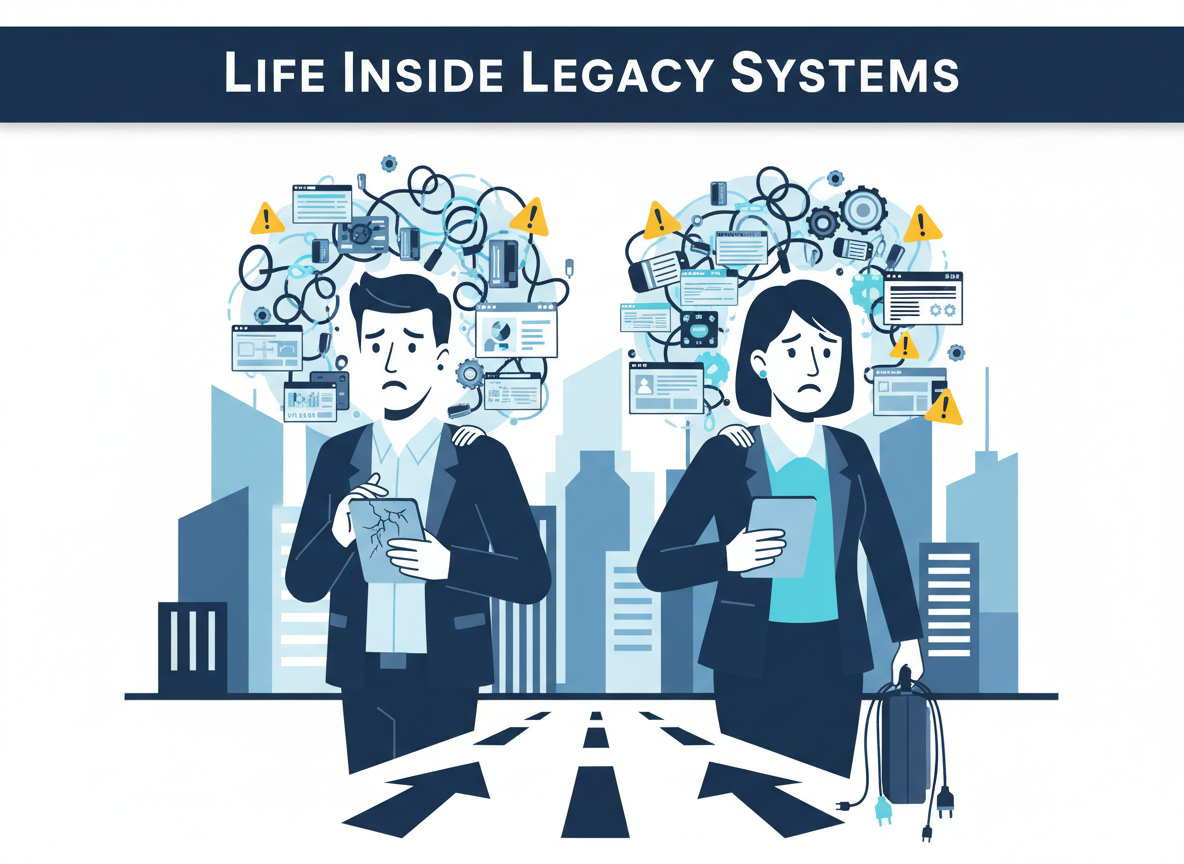
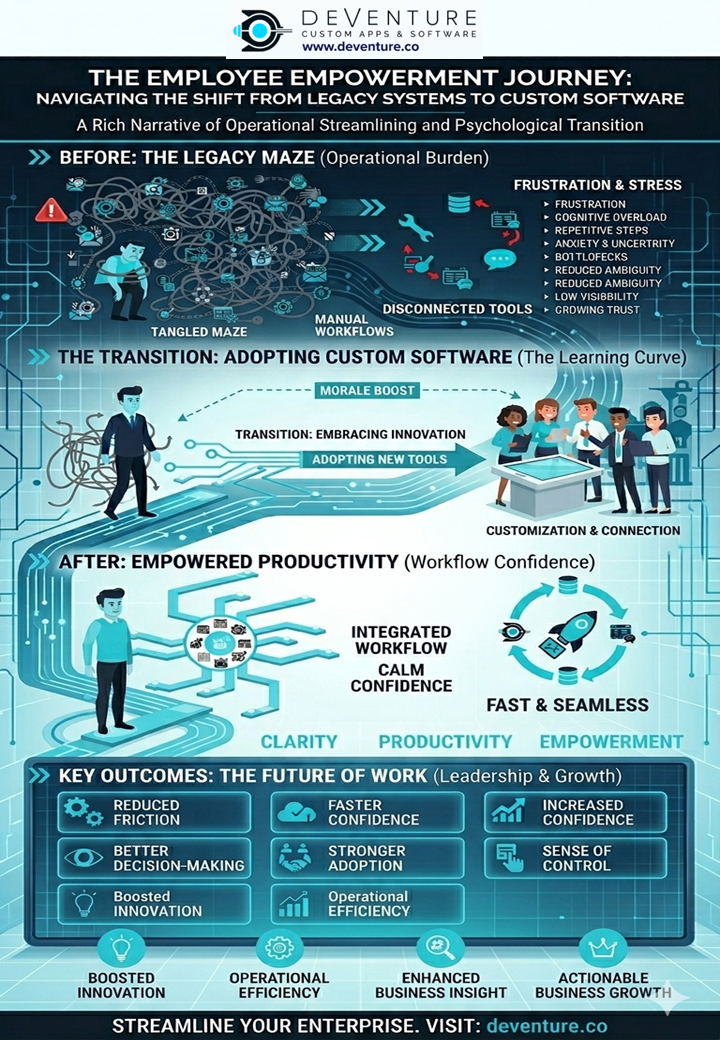
Legacy environments often create friction that becomes normalized over time. Teams work around slow interfaces, disconnected tools, duplicated data, and rigid processes because they have learned to adapt. But adaptation should never be mistaken for efficiency.
In many organizations, employees working with outdated or monolithic systems experience constant context switching, repetitive manual tasks, limited visibility, and unnecessary delays. They often feel anxiety around errors, missed steps, and inconsistent data.
This creates cognitive overload. People spend energy remembering workarounds, checking multiple systems, and compensating for software limitations. Over time, that affects more than productivity. It affects confidence, engagement, and trust.
The Feeling Before the Workday Even Starts
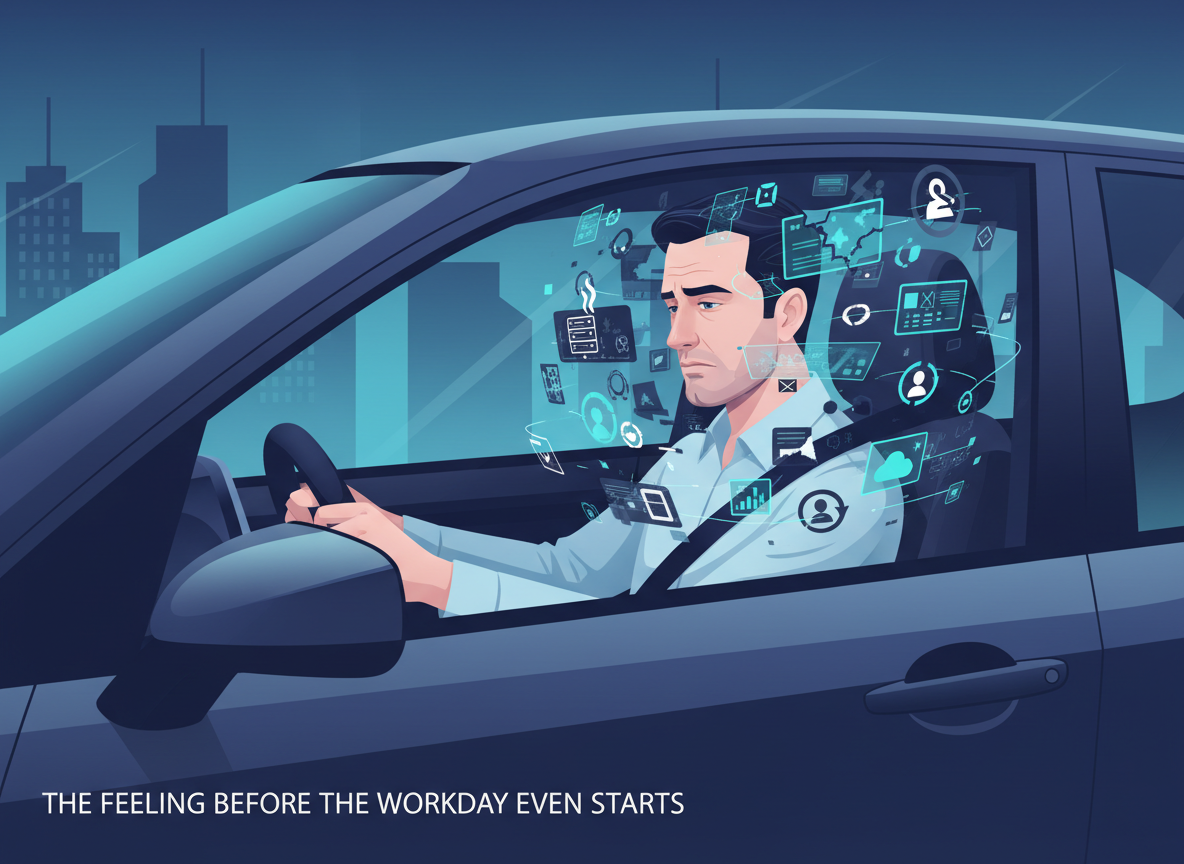
One of the most overlooked effects of poor systems happens before employees even begin working. While riding or driving to work, many are already anticipating friction.
They are not thinking about progress. They are thinking about what might break, what information will be hard to find, and which manual steps will slow them down. That creates a low-grade anxiety before the day has even started.
Instead of arriving with focus, they arrive mentally prepared for resistance. Instead of feeling in control, they feel like they are entering a system that will demand extra effort just to complete basic tasks.
What Changes When Software Is Built Around the Workflow
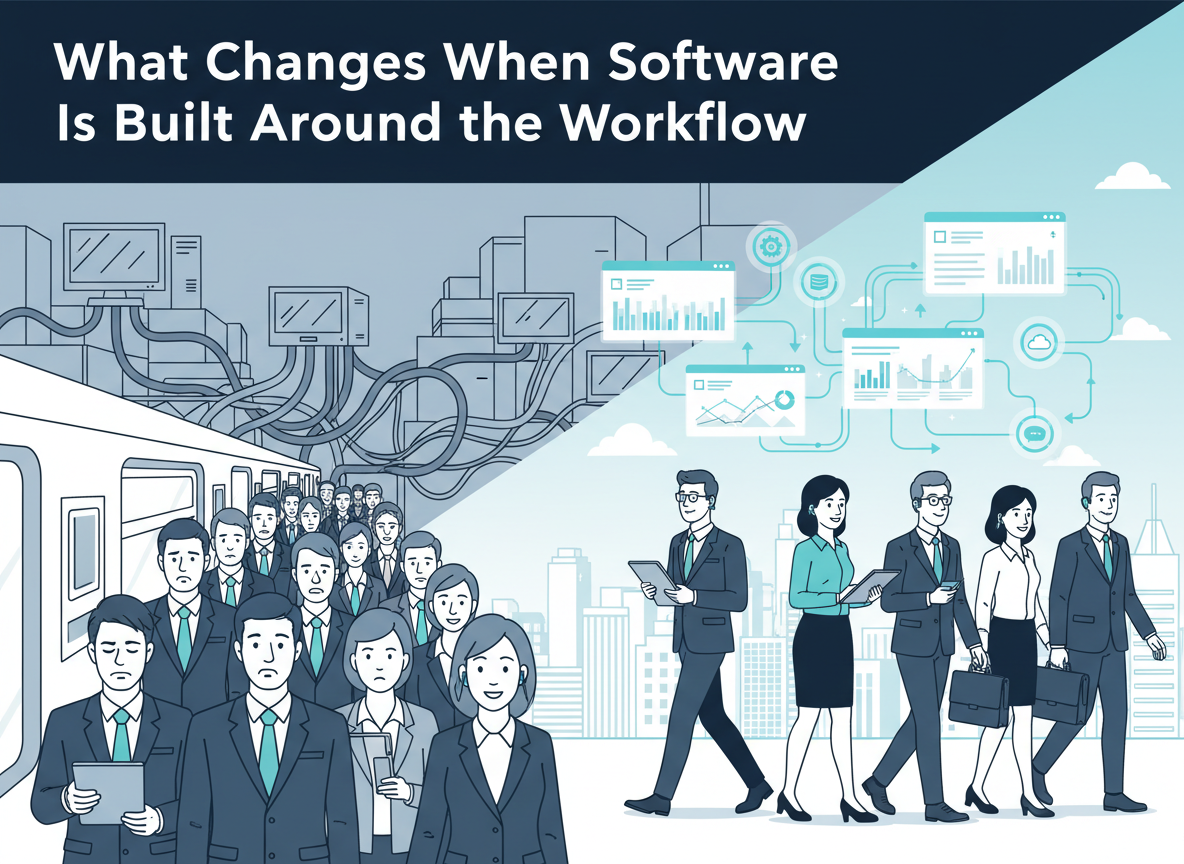
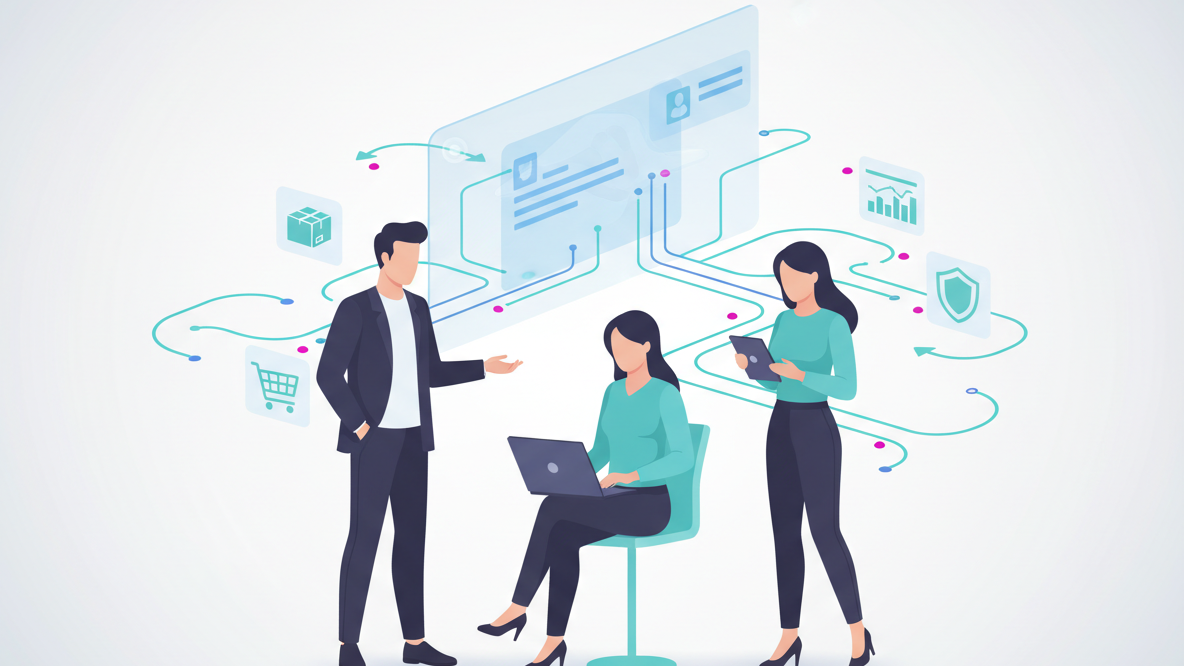
Custom software changes the experience because it is designed around how the business actually works. Instead of forcing teams to adapt to generic processes, it supports the real flow of work, the real dependencies, and the real decisions people need to make.
That creates a meaningful psychological shift. Employees move from uncertainty to clarity. They no longer have to guess where information lives or what happens next. They spend less time managing friction and more time contributing value.
When workflows are streamlined through well-designed custom systems, teams gain clearer responsibilities, faster access to relevant information, fewer manual handoffs, and better visibility across departments. The result is a calmer, more focused working rhythm.
The Commute Feels Different
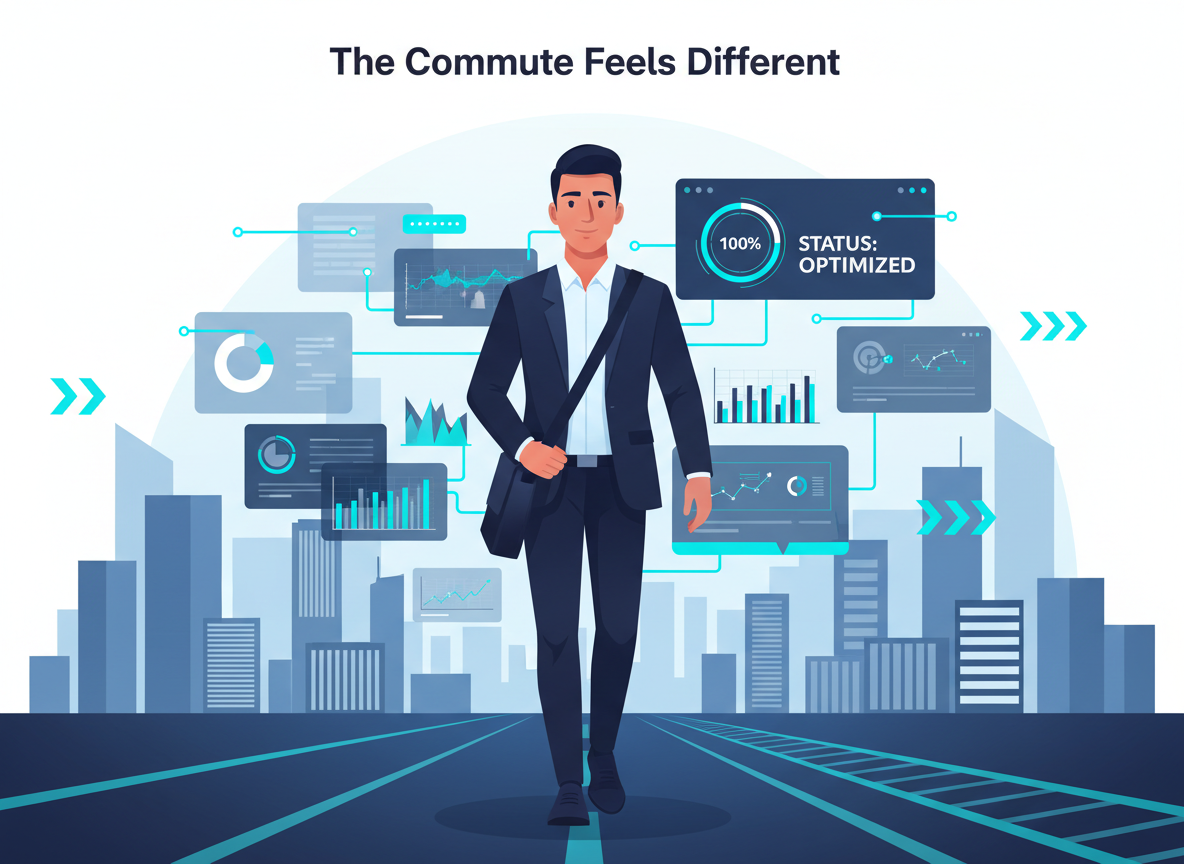
When employees trust the systems they work with, the commute to work changes too. They are no longer mentally bracing for confusion, delays, or unnecessary complexity.
Instead, they are preparing for progress. They expect clarity. They expect the workflow to support them. They trust that the tools in front of them will help them move faster, make better decisions, and stay aligned with the rest of the team.
That emotional shift matters. It creates a calmer start to the day, a stronger sense of control, and more mental space for meaningful work.
Why the Emotional Side of Transformation Matters
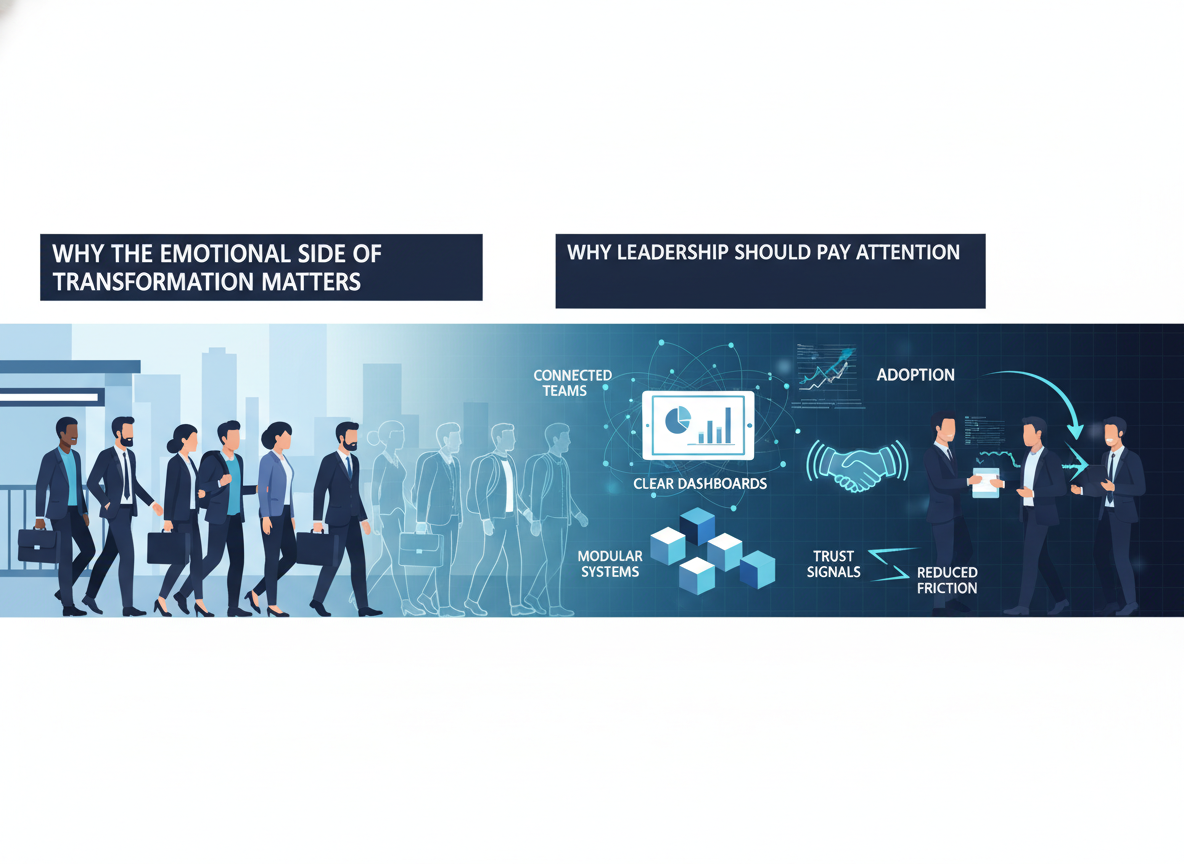
Business leaders often measure transformation through delivery speed, reduced costs, or improved reporting. Those are important outcomes, but they are not the full picture.
If employees still feel confused, interrupted, or unsupported, the transformation is incomplete. Psychology directly affects adoption. People are far more likely to embrace new systems when those systems reduce ambiguity, simplify work, and make them feel more capable.
When software creates clarity, it builds trust. When it removes unnecessary friction, it creates momentum. That is what drives long-term value.
Why Leadership Should Pay Attention
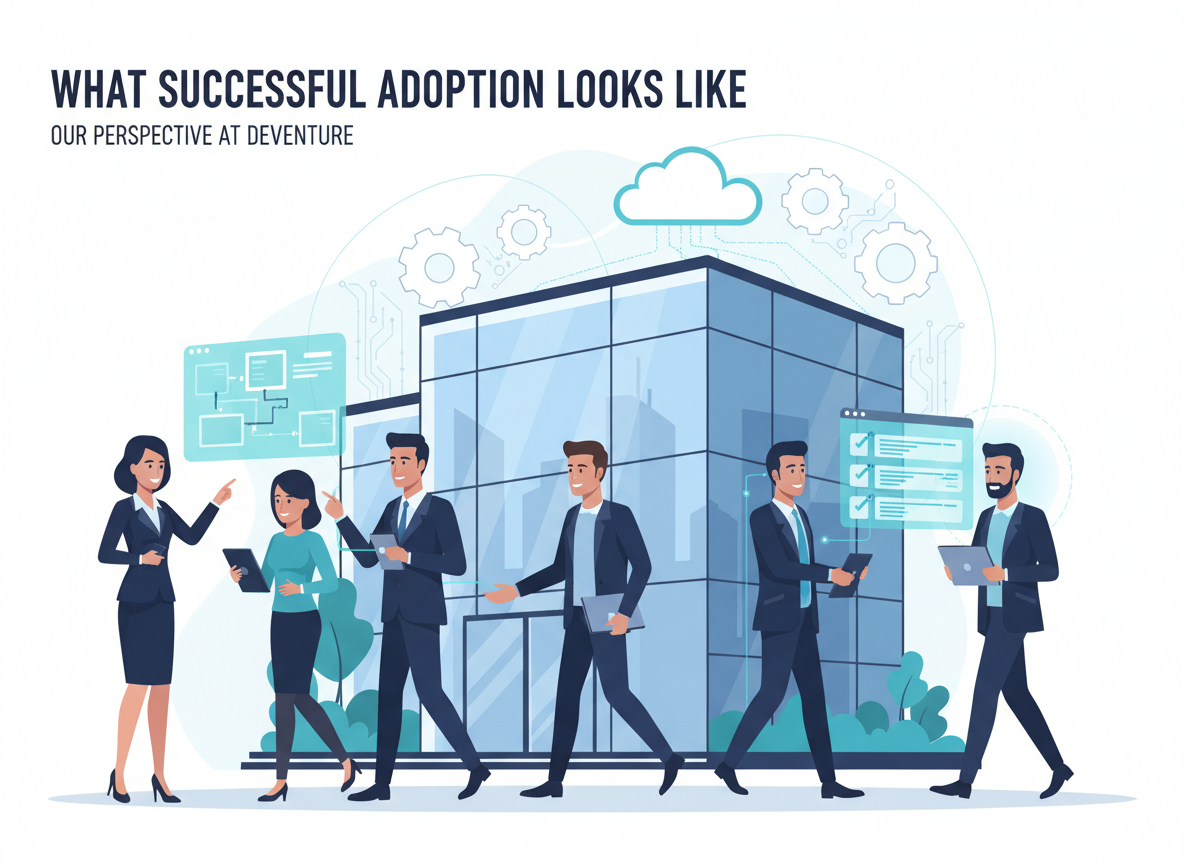
Successful adoption becomes visible in both behaviour and outcomes. Teams stop relying on side spreadsheets, manual trackers, and informal fixes. Communication becomes more proactive because visibility improves. Decision-making becomes faster because the right information is easier to access.
Most importantly, employees begin to feel ownership again. They trust the process because the process finally supports them.
That trust is not built by software alone. It comes from a thoughtful delivery approach that combines product thinking, user experience, engineering, and quality assurance from the start.
Our Perspective at Deventure
At Deventure.co, we believe the best software solutions are not just functional. They are enabling.
They help teams work with more clarity, confidence, and control. That is why we approach custom software as a partnership, not a transaction. From UI/UX design to development and QA, our in-house teams work together to build systems that are reliable, scalable, and aligned with how businesses actually operate.
Because when software reflects the real workflow, transformation becomes easier to adopt and easier to sustain.
Final Thought
The move from legacy systems to custom software is not only a technology upgrade. It is a shift in how people experience work.
When businesses reduce friction, they do more than improve efficiency. They create the conditions for better focus, stronger collaboration, faster execution, and greater ownership.
And in the long run, that psychological shift is often what turns digital transformation from a project into a lasting competitive advantage.